 Eden & Dane
A landscape
that feeds.
Multi-layer perennial edible systems designed as forest ecosystems. Canopy, understory, shrub, herbaceous, ground cover, root, and vine - composed into a self-sustaining landscape that yields without demanding to be farmed.
The oldest
way of growing food.
A food forest is what every traditional human culture eventually built when given enough time and stable land. Layered perennials in deliberate companionship, structured by a tree canopy, producing food year-round with almost no annual replanting.
Eden & Dane designs food forests as both productive landscapes and beautiful ones. The aesthetic comes first - we are not building a permaculture project that happens to look agricultural. We are building an edible landscape that happens to feed you.
Once established, a properly designed food forest produces a meaningful percentage of a household's food with vastly less labor than a vegetable garden of equivalent yield, while improving the soil and the ecology of the entire property each year.
We design the layered planting plan, source the trees and perennials, sequence the install, and provide a five-year stewardship guide so the system arrives at maturity rather than peters out at year three.
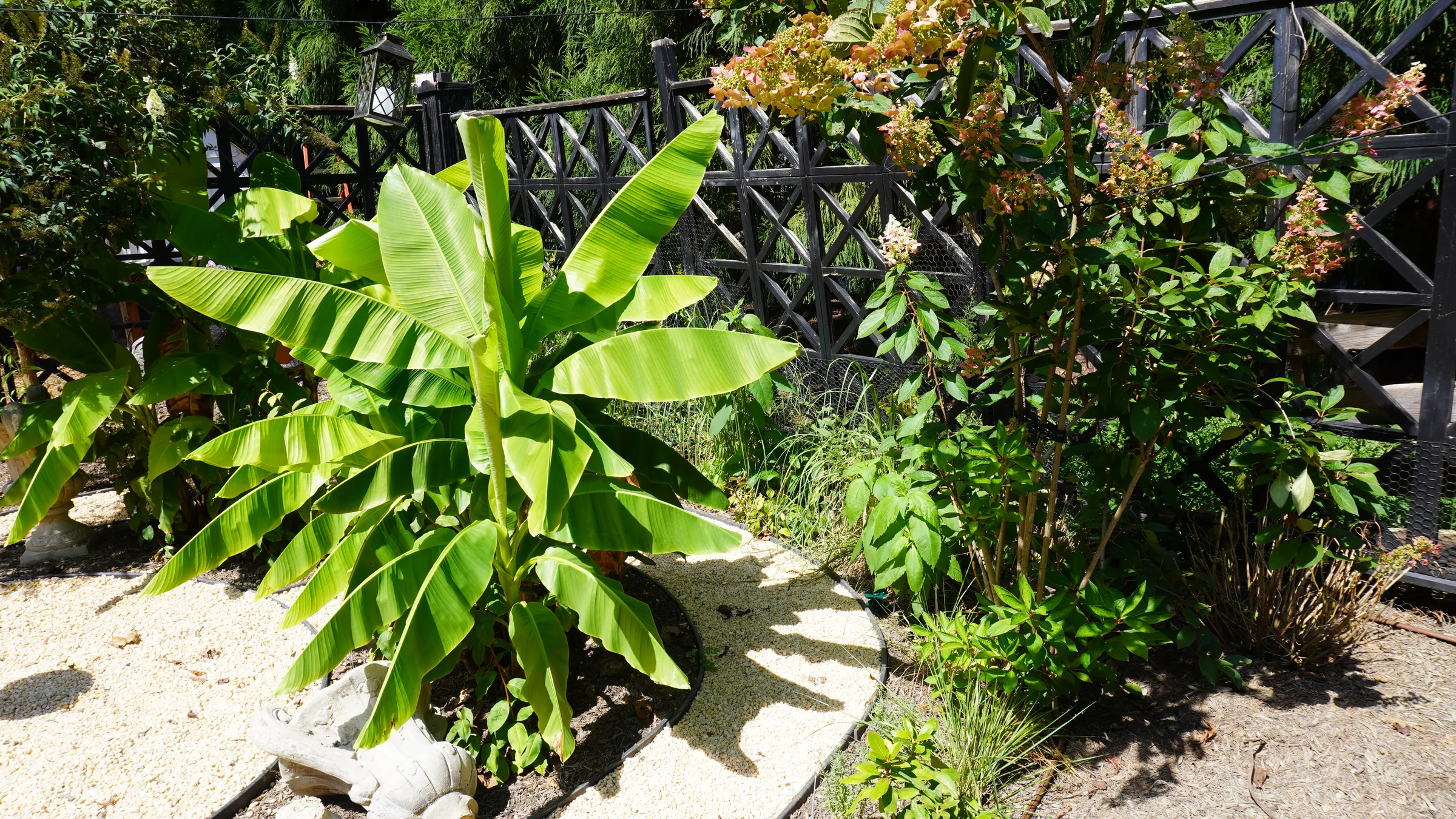
A productive landscape, not a farm.
Canopy fruit trees, understory shrubs, perennial ground covers, and root crops - all composed as designed landscape rather than agricultural rows.
How a food forest composes itself.
Large fruit and nut trees.
Apple, pear, persimmon, chestnut, walnut, pecan, mulberry. The structural overstory. Long-horizon trees that take seven to fifteen years to mature into full yield, but produce for decades.
Mid-tier edibles.
Pawpaw, serviceberry, hazelnut, elderberry, currants, gooseberries, blueberries, aronia. The layer where most of the yield concentrates in the early years before the canopy is mature.
Pollinator + edible cover.
Comfrey, sorrel, alpine strawberries, asparagus, rhubarb, lovage, walking onions. The living mulch layer that suppresses weeds, feeds pollinators, and produces continuously.
Vertical and underground yield.
Sunchokes, groundnut, scorzonera, hardy kiwi, grape, hops, climbing beans. The layers most people forget. Root crops below, vines climbing the structural trees, doubling the yield per square foot.
Three reasons our food forests thrive.
Companions, not collections.
Every plant choice considers what it gives the system - nitrogen fixation, pollinator forage, dynamic accumulation, mulch material - not only what it produces. The system stabilizes faster than collections of unrelated edibles.
Aesthetic, not utilitarian.
Food forests can look agricultural and unkempt, or they can look like designed estate landscapes that happen to be edible. We design for the second outcome. The forms, sight lines, and pathways are composed.
Designed to arrive, not collapse.
Most amateur food forests collapse around year three when the easy annual yields fade and the perennials are not yet mature. Our designs sequence the yield arc so something is always producing while the structure matures.
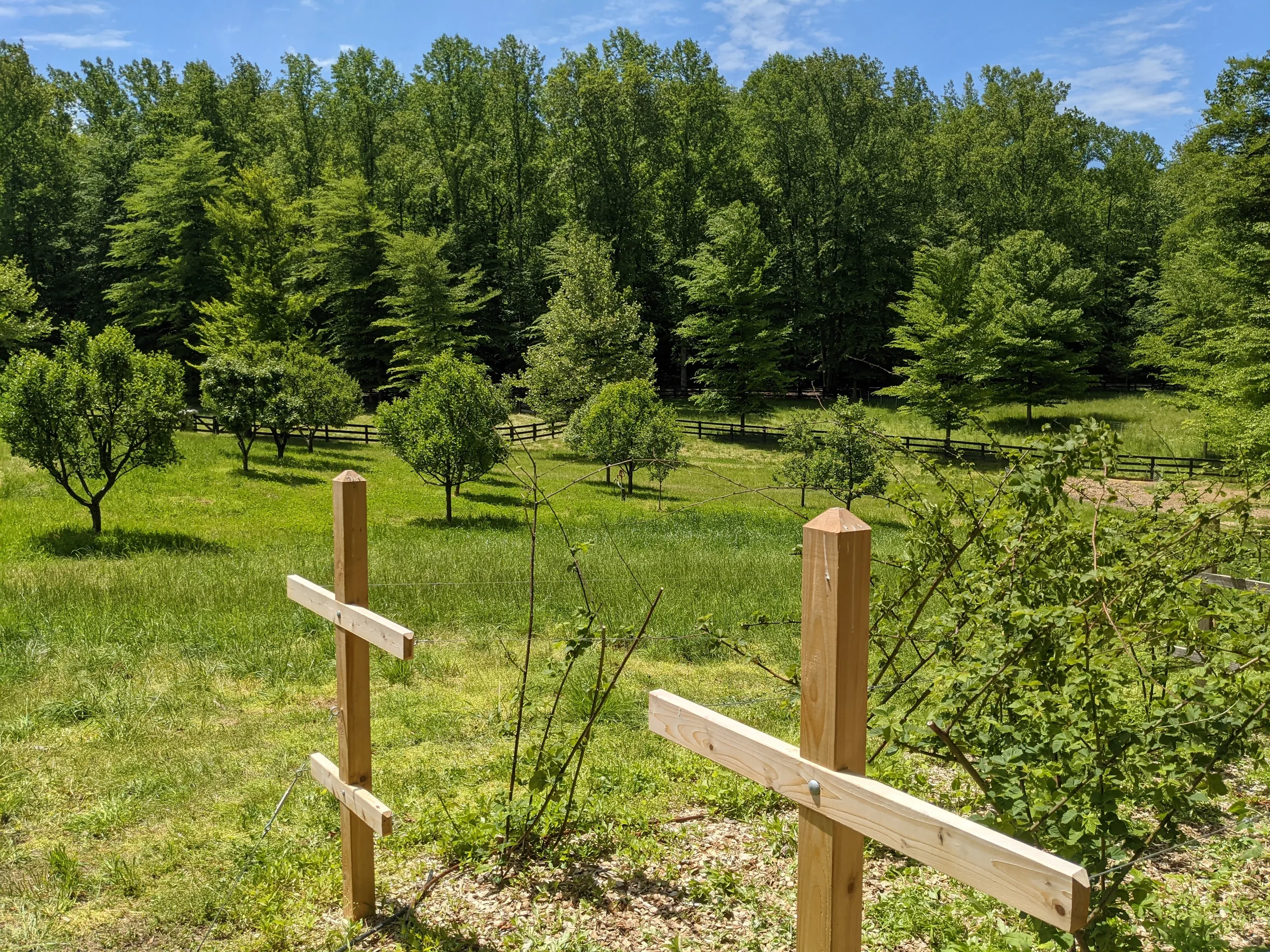
A landscape
that feeds the future.
Begin with a 15-minute discovery call. We will discuss your land, your appetite for the long horizon, and what your property could quietly produce in ten years.
Book your discovery call