 Eden & Dane
Orchards
as heirlooms.
Fruit and nut orchards designed around heritage varieties, planted as legacy infrastructure, and structured to mature into something worth inheriting. The orchard you plant now is the one your grandchildren will eat from.
Trees planted
for the long arc.
Most residential orchards are afterthoughts - a row of standard nursery apples and pears along the back fence, planted with no eye toward variety, pollination, or what the trees will look like in twenty years.
Eden & Dane designs orchards the way old estate properties were designed - with rare and heritage varieties most people have never tasted, with pollination partners architected into the layout, with form and shape that hold their composition through every season, and with a horizon that assumes the trees will outlive the install.
The result is an orchard that produces fruit you cannot buy in any store, gives the property a sense of established permanence, and increases in value and yield every year it remains in the ground.
We design the layout, grow many of the trees in our own nursery in Great Falls, oversee install, and provide a multi-year care guide for pruning, grafting, and replacement so the orchard arrives at maturity intact.
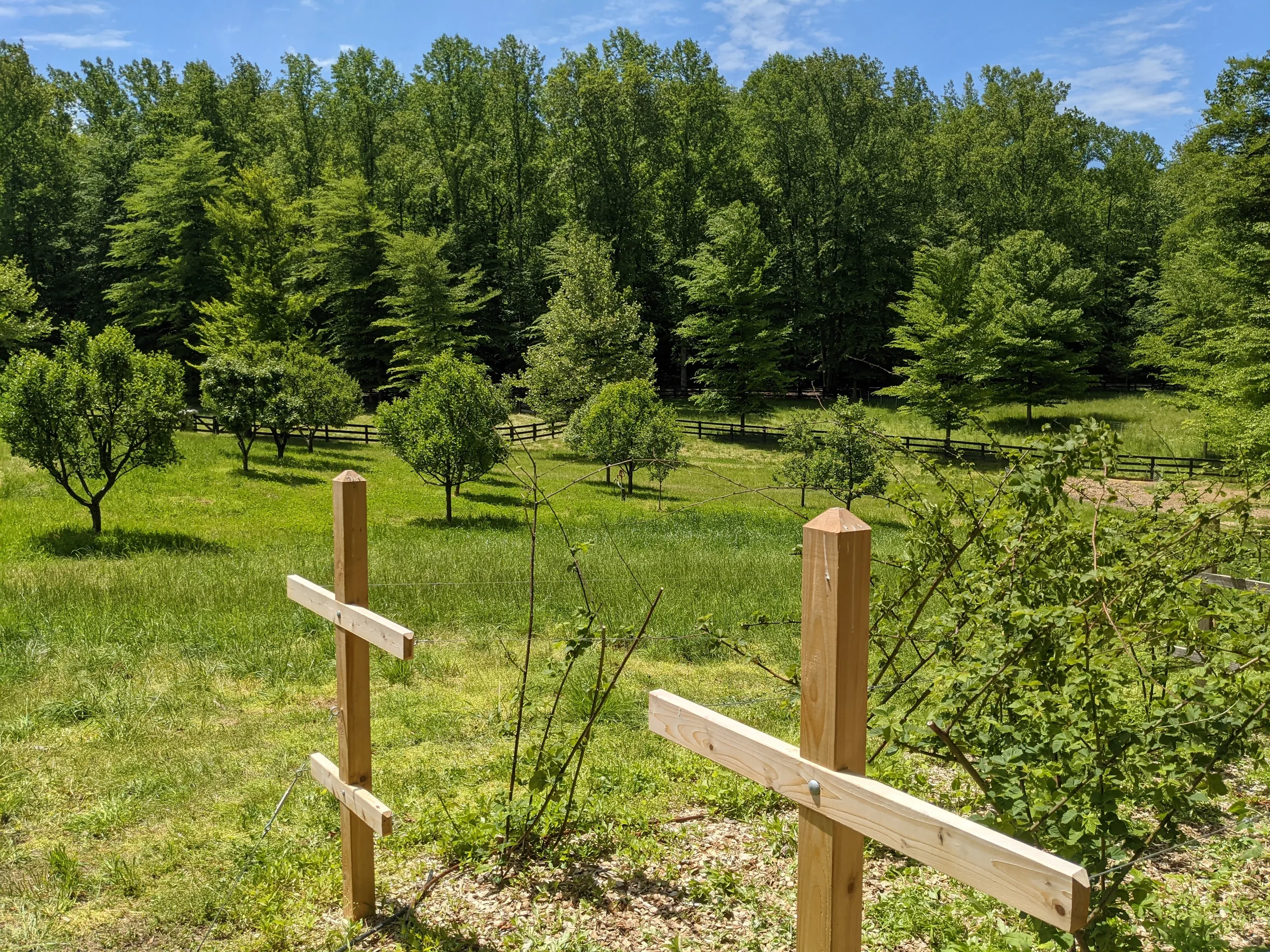
Young trees, staked and waiting.
Heritage and disease-resistant varieties selected for the specific site. Planted with companion herbs and trained on cedar posts. The orchard as designed landscape.
Four elements of an heirloom orchard.
Beyond the grocery store.
Esopus Spitzenburg apples. Comice and Magness pears. American persimmons. Heritage cider apples. Antique peach cultivars saved from the Carolinas. Varieties bred for flavor and storage before grocery shipping changed the calculus.
Designed cross-pollination.
Apples need other apples. Pears need specific partners. Sweet cherries need bitter cherries. We map the pollination web for the entire orchard so every tree has its partners within bee-flight distance and yield is reliable.
Trees as architecture.
Selected trees trained as espalier along walls and along garden walks. Goblet pruned heritage apples. Multi-graft trees that produce six varieties from one trunk. The orchard reads as composed architecture, not utility.
Sequenced to mature gracefully.
Standard rootstock for legacy trees that produce for a century. Dwarf rootstock for the spaces where yield is needed within five years. The mix is designed so the orchard never collapses through a transition gap.
Three reasons they endure.
Beyond what you can buy.
We plant trees you cannot find at a garden center. Many are grown in our own nursery in Great Falls: seed-grown apples, native pawpaws and mulberries, and uncommon nuts. The orchard becomes a small, quiet preservation project as well as a yield project.
Composed with the property.
Orchards integrated into garden walks, beside ponds, along stone walls. Not relegated to a back corner. The orchard becomes part of the daily landscape rather than a separate utility zone.
Designed to outlive install.
Every orchard ships with a multi-year care guide covering pruning windows, grafting opportunities, replacement protocol, and yield expectations. The owner is set up to steward the orchard properly, not guess at it.
Plant the orchard
your grandchildren eat from.
Begin with a 15-minute discovery call. We will talk about your land, the trees you have always loved, and what could mature on your property over the next quarter century.
Book your discovery call