 Eden & Dane
Pawpaw Guild Field Guide
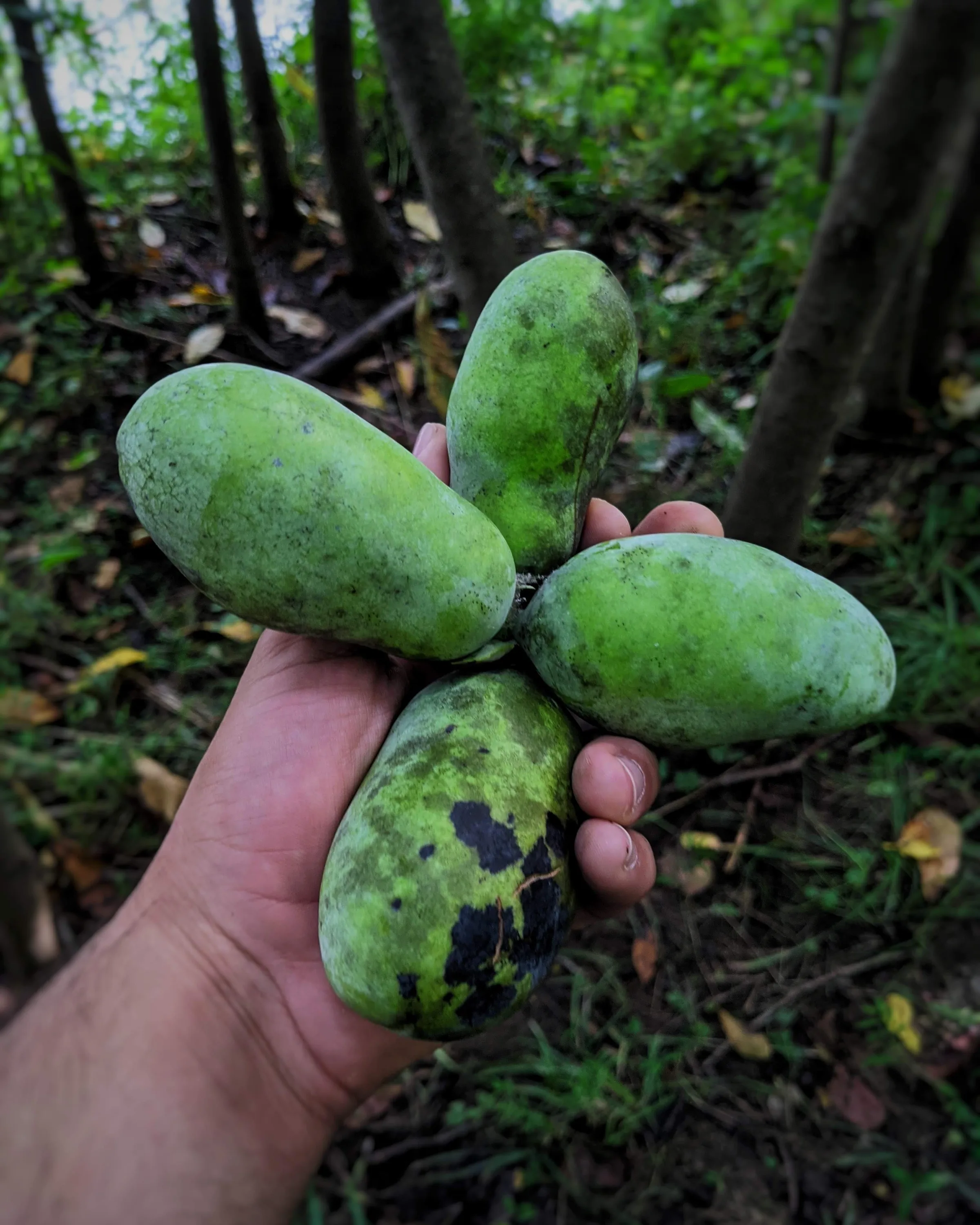
Companion plants that support pawpaw specifically - what to plant around it for pollination support, understory productivity, and long-term soil health.
Pawpaw has a few genuine quirks that make companion planting worth doing deliberately rather than guessing. It is pollinated by flies and beetles, not bees, drawn in by its odd, faintly rotten-smelling maroon flowers, so nearby plants that also attract those pollinators can meaningfully improve fruit set. It also tolerates more shade than most fruit trees, opening up understory planting options most guilds do not have.
This guide covers what to plant in the understory beneath a young pawpaw, what draws in its specific pollinators, and how to build a small guild around the tree that supports its growth rather than competing with it.
What's included
For every pawpaw
we sell.
If you bought a pawpaw from us, or are growing one from elsewhere, this closes a real gap - pawpaw pollination is genuinely different from most fruit trees, and understanding it improves your actual fruit set.
It also solves the "what do I do with the space under this tree" question, since pawpaw tolerates more shade than most fruiting trees and that understory space is otherwise wasted.
What to know before you buy
This guide assumes you already have or are planting a pawpaw - it is a companion reference, not a growing guide for the tree itself.
Pollinator support plants take a season or two to establish before meaningfully improving fruit set - plant them early, not after you notice a pollination problem.
Before you buy.
From download to done.
- 1. Read it once, start to finishGet the whole guild in your head before digging: what each companion does for the pawpaw, and where it goes.
- 2. Check the list against your siteCross off anything that does not suit your sun, soil or zone, and note substitutes.
- 3. Mark the layout on the groundUse the layout guidance to flag positions around the trunk before you buy plants.
- 4. Plant in sequenceEstablish the main plant and the first companions, then add the rest over the following seasons.