 Eden & Dane
Siberian Iris
One of the most reliable perennials for the Mid-Atlantic. Long-lived, clump-forming, and in bloom every May without any attention.
Siberian iris is the iris for people who do not want to fuss. Unlike bearded iris, it is not prone to rot or borers, it tolerates wet soil, and it forms dense, grassy clumps that look good long after the flowers are gone.
That tolerance of wet feet makes it a natural for rain gardens, swales and pond edges, where its dense roots help hold soil in place. It is equally happy in an ordinary border.
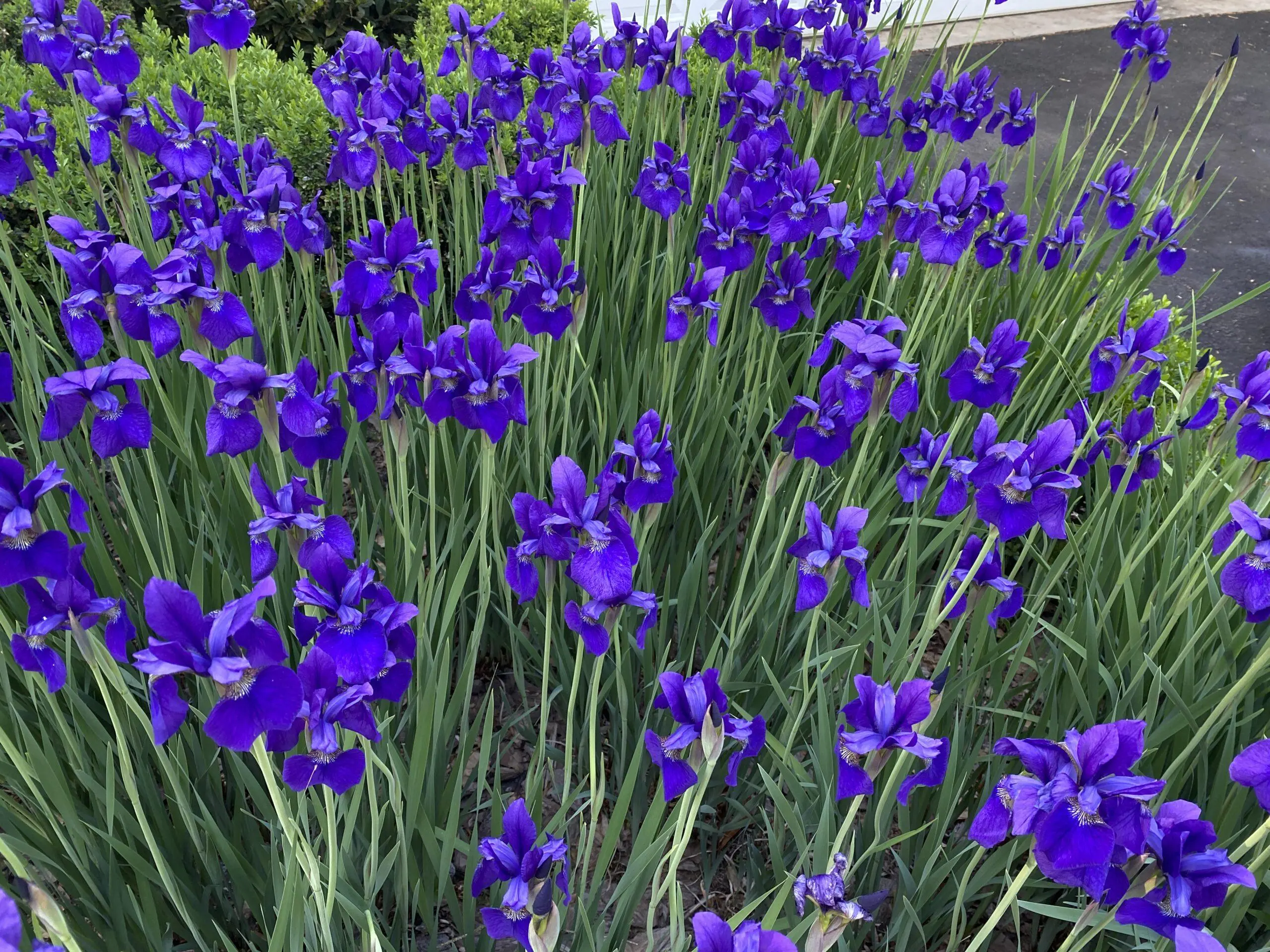
In May the clumps send up slender stems of violet-blue flowers, an early source of pollen for bumblebees just as they build their colonies.
Before you plant.
Planting & Growing Information
Good company
for your siberian iris.

The iris for
wet ground.
Siberian iris earns its place in a working landscape by handling ground other perennials cannot: the soggy bottom of a rain garden, the edge of a pond, the low corner where water stands after a storm.
Its roots form a dense mat that holds soil against runoff, which is why it is so useful in swales and along water.
Once planted it will outlive most of the garden around it, slowly widening into clumps that can be divided and shared.
- Bare-root divisionsThe traditional way to plant iris, in spring or late summer.
- Container plantsEstablished clumps for a faster first bloom.
- Current stockInventory varies by season and batch. Contact us to confirm what is available now, and in what size.
What to know before you buy
Plant with the top of the rhizome about 1 to 2 inches below the soil surface.
Water regularly the first season. Established clumps handle both wet spells and short dry ones.
Cut foliage back to a few inches in late fall or early spring.
Divide clumps every 5 to 8 years when the centers thin out.
What we ship.
Plants ship in the dormant seasons, late fall and early spring, with local pickup in Great Falls. Availability changes by batch, so ask if you need a particular size.
Planting at scale.
We supply landscapers, nurseries, farms and larger residential projects with siberian iris in quantity. Stock is seasonal and limited, so get in touch ahead of your planting window and we will plan around your order.
Ask about wholesale →Planning an orchard, guild or garden around this plant? An on-site consult in the DC area starts at $250, a written Remote Strategy at $1,500, or start small with a free guide.