 Eden & Dane
Virginia Blue Flag Iris
The native iris of Virginia's wet meadows and pond edges. Blue-violet flowers in late spring, and roots that will stand in shallow water.
Virginia blue flag grows wild in marshes, wet meadows and along the edges of ponds and slow streams across the eastern half of the country, including much of Virginia. It is the native counterpart to the Siberian iris, and it is even more at home with wet feet.
It will grow in a few inches of standing water as readily as in damp garden soil, which makes it one of the best plants for the wettest zone of a rain garden, a pond margin, or the low spot where water collects after every storm. Its rhizomes knit into a dense mat that holds soil against moving water.
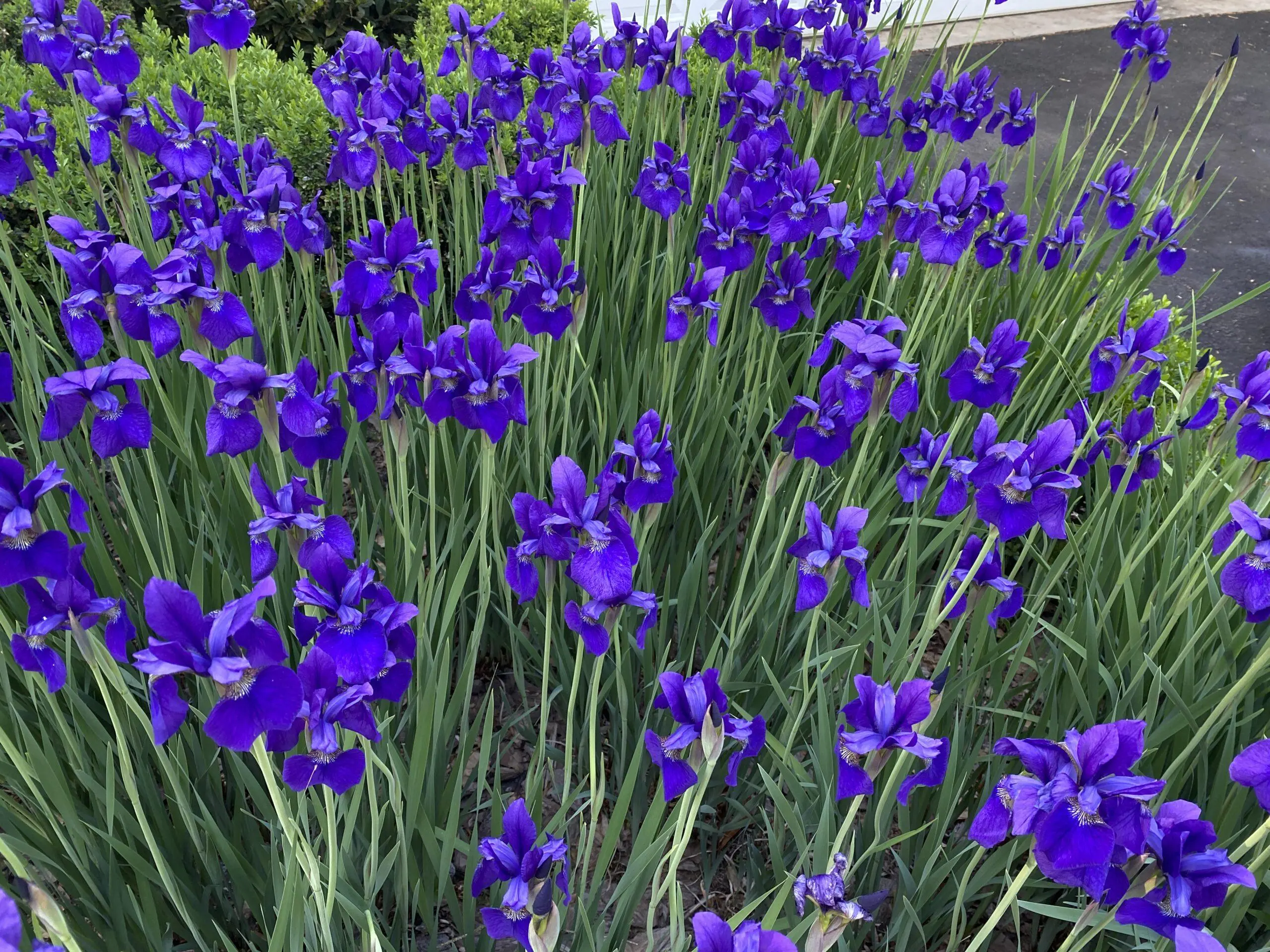
In late spring it sends up blue to violet flowers veined with yellow at the base of each petal. Bumblebees work them heavily, and the sword-shaped leaves stay tidy through the season.
Before you plant.
Planting & Growing Information
Good company
for your virginia blue flag iris.

Made for
the wettest ground.
Blue flag earns its place where almost nothing else will grow: the bottom of a rain garden, the shallow margin of a pond, the spot in a swale that stays wet for days.
Because it is native, it also fits the conservation plantings that cost-share programs like VCAP reimburse, alongside the other native rain garden species.
Once settled it spreads slowly into broad clumps that can be divided and moved to the next wet spot on the property.
- Bare-root divisionsPlanted in spring or late summer, the traditional way to start iris.
- Container plantsEstablished plants for a faster first bloom.
- Current stockInventory varies by season and batch. Contact us to confirm what is available now, and in what size.
What to know before you buy
Plant the rhizome just below the soil surface, or at the edge of shallow water.
It wants consistent moisture. In a dry border it will survive but sulk.
Cut back foliage in late fall or early spring.
Keep it away from pets and livestock that chew plants: iris rhizomes are toxic if eaten.
What we ship.
Plants ship in the dormant seasons, late fall and early spring, with local pickup in Great Falls. Availability changes by batch, so ask if you need a particular size.
Planting at scale.
We supply landscapers, nurseries, farms and larger residential projects with virginia blue flag iris in quantity. Stock is seasonal and limited, so get in touch ahead of your planting window and we will plan around your order.
Ask about wholesale →Planning an orchard, guild or garden around this plant? An on-site consult in the DC area starts at $250, a written Remote Strategy at $1,500, or start small with a free guide.