 Eden & Dane
Apple Tree
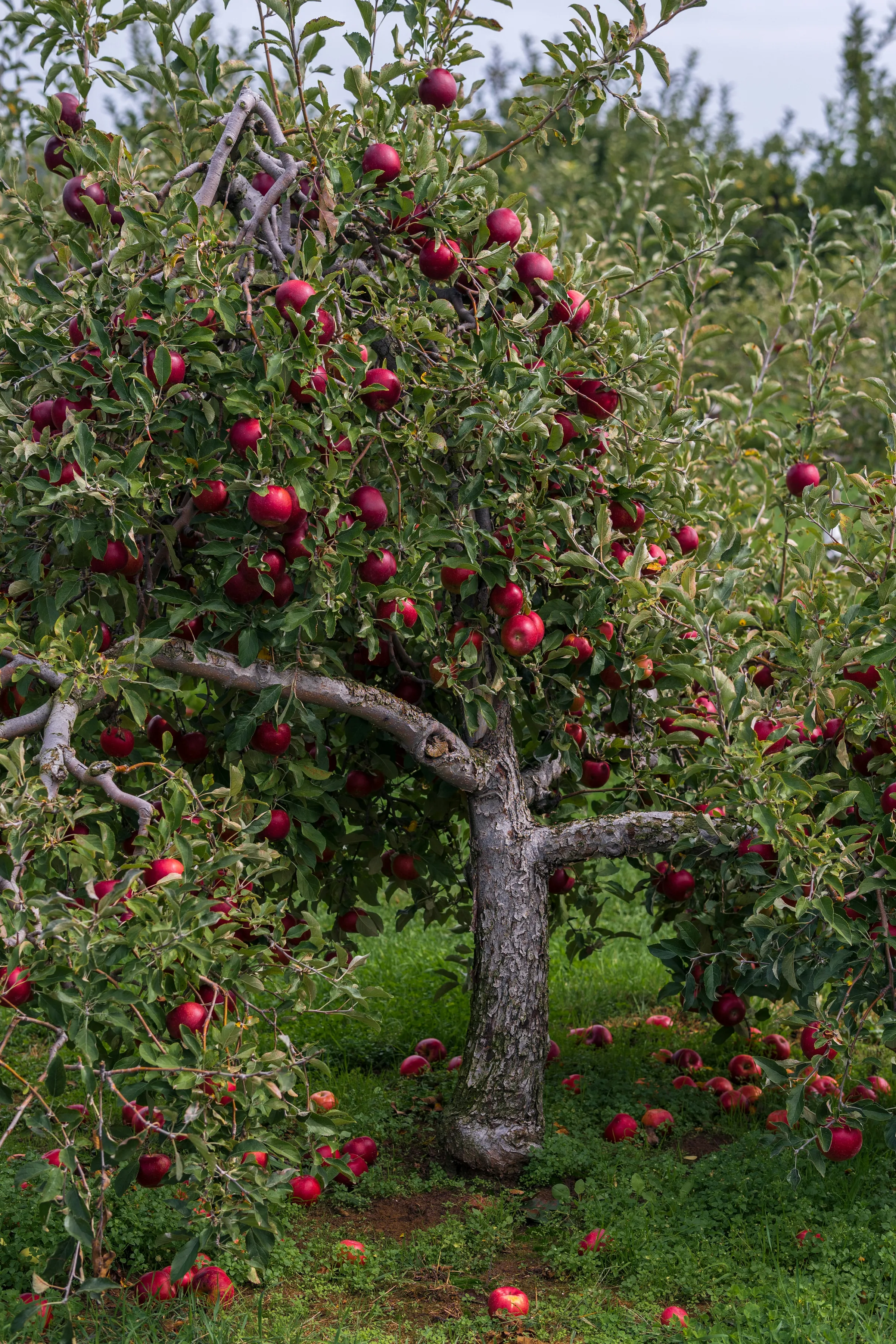
Grown from seed in our air-prune beds in Great Falls, so every tree goes in with a dense, fibrous root system and grows into a full-size, long-lived apple.
Every apple tree we sell starts as a seed in one of our air-prune beds. Because roots stop growing when they reach the open base of the bed, the young tree branches into a mass of fine feeder roots instead of circling a pot. Trees raised this way transplant well and settle into the ground quickly.
Apples do not come true from seed, so each of our trees is genetically unique, and its fruit will not match a store variety. Most seedlings produce apples best suited to cider, cooking, drying and wildlife, and the occasional tree turns out to be superb for fresh eating. Seedlings also make the traditional rootstock for grafting, so you can plant one now and add a named variety later.
Before you plant.
Planting & Growing Information
Good company
for your apple tree.
Grown from seed,
rooted for the long haul.
Our apple trees are grown from seed in air-prune beds at our nursery in Great Falls. Air pruning stops roots from circling: each time a root tip reaches the open base of the bed it stops, and the plant branches into a dense, fibrous root system instead. The tree you plant has a root system built to take off, not one that has spent its life wrapped around the inside of a pot.
Apples do not come true from seed. Every seedling is a new, genetically unique tree, a cross between its parents, and its fruit will not match either one. Most seedlings bear apples that are best for cider, cooking, wildlife and livestock. Now and then one is excellent to eat fresh. That is how nearly every named variety you know began.
Seedling trees grow on their own vigorous roots, so they become full-size, long-lived trees that anchor well and tolerate drought better than trees on dwarfing rootstock. They also make ideal rootstock: plant one now and graft a named variety onto it later, or let it fruit and see what you have.
- Sizes up to 6 feetSeedling trees in three sizes: 1 to 2 feet, 2 to 4 feet, and 4 to 6 feet. Larger trees give you a head start on fruiting and shade.
- Seedling treesGrown from seed in our air-prune beds. Full-size, vigorous and each one unique.
- Pairs for pollinationAny two seedlings bloom close enough together to pollinate each other. Buy at least two.
- Rootstock for graftingA strong seedling to graft your own chosen variety onto, the traditional way to start an orchard tree.
- Current stockInventory varies by season and batch. Contact us to confirm what is available now, and in what size.
What to know before you buy
These are seedling apples, not named varieties. The fruit will be different from any store apple, and quality varies from tree to tree. If you need a specific variety, graft it onto a seedling.
Apples need a second apple tree nearby to set fruit. Two of our seedlings will pollinate each other, and so can a crabapple in the area.
Expect a full-size tree of roughly 20 to 30 feet, and first fruit in about six to ten years. Grafting a named variety onto the seedling can bring that forward.
Give apples full sun and good air movement. Morning sun that dries the leaves early is one of the best defenses against fungal disease.
What we ship.
Plants ship in the dormant seasons, late fall and early spring, with local pickup in Great Falls. Availability changes by batch, so ask if you need a particular size.
Planting at scale.
We supply landscapers, nurseries, farms and larger residential projects with apple tree in quantity. Stock is seasonal and limited, so get in touch ahead of your planting window and we will plan around your order.
Ask about wholesale →
Planning an orchard, guild or garden around this plant? An on-site consult in the DC area starts at $250, a written Remote Strategy at $1,500, or start small with a free guide.