 Eden & Dane
Fig Tree
Cold-hardy varieties selected for Zone 7b survival and strong production - reliable, sweet, and capable of two crops per season in a sheltered microclimate.
Fig has a reputation as a Mediterranean plant that struggles north of Zone 8, and for most varieties that reputation is deserved. We only grow cold-hardy selections proven to survive and produce reliably in our own Zone 7b conditions - Brown Turkey and Chicago Hardy are the workhorses, chosen for consistency over novelty.
A sheltered microclimate, a south-facing wall, a spot out of prevailing winter wind, meaningfully improves both survival and the odds of a second crop in the same season. Figs that die back to the ground in a hard winter will often resprout and still fruit the same year, which is more forgiving than most fruit trees offer.
Before you plant.
Planting & Growing Information
Good company
for your fig tree.

Mediterranean fruit,
proven in Zone 7b.
Most figs sold in the Mid-Atlantic are varieties that belong in Georgia. We only carry cold-hardy selections that have come through our own winters and produced the following summer.
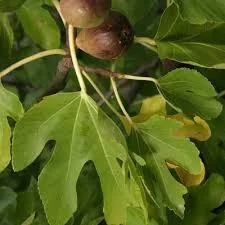
Figs are self-fertile, need no spraying, and the common types need no pollinating wasp. A sheltered site against a south wall can give two crops: a small early breba crop and a larger main crop in late summer.
Even when a hard winter kills a fig to the ground, it usually resprouts from the roots, and hardy varieties can still fruit that same year.
- Brown TurkeyA reliable, heavy-bearing workhorse with sweet, amber flesh.
- Chicago HardyAmong the hardiest figs, dependable after hard winters.
- Field-grown treesLarger plants for faster fruiting, in limited supply.
- Current stockInventory varies by season and batch. Contact us to confirm what is available now, and in what size.
What to know before you buy
Plant in the warmest spot you have: full sun, south or west facing, out of winter wind.
Mulch the root zone heavily in late fall. In a young tree's first winters, wrapping or caging with leaves adds protection.
Figs fruit on the current season's growth, so even a tree killed back to the ground can bear.
Pick figs when they soften and droop on the stem. They do not ripen further once picked.
What we ship.
Plants ship in the dormant seasons, late fall and early spring, with local pickup in Great Falls. Availability changes by batch, so ask if you need a particular size.
Planting at scale.
We supply landscapers, nurseries, farms and larger residential projects with fig tree in quantity. Stock is seasonal and limited, so get in touch ahead of your planting window and we will plan around your order.
Ask about wholesale →

Planning an orchard, guild or garden around this plant? An on-site consult in the DC area starts at $250, a written Remote Strategy at $1,500, or start small with a free guide.