 Eden & Dane
Project Dossier · Permaculture Design
The 2 House
Orchard
A two-home food forest, tuned so the family can gather dinner in under fifteen minutes a day.
96,670 gal / yr
Rainwater capturable off a 3,178 sq ft roof at 90%, routed first to the orchard and berry rows.
$2,430–$4,970 / yr
Estimated retail value of the annual harvest at full maturity.
699–1,402 lbs / yr
Projected annual yield once the food forest reaches production.
On the ground
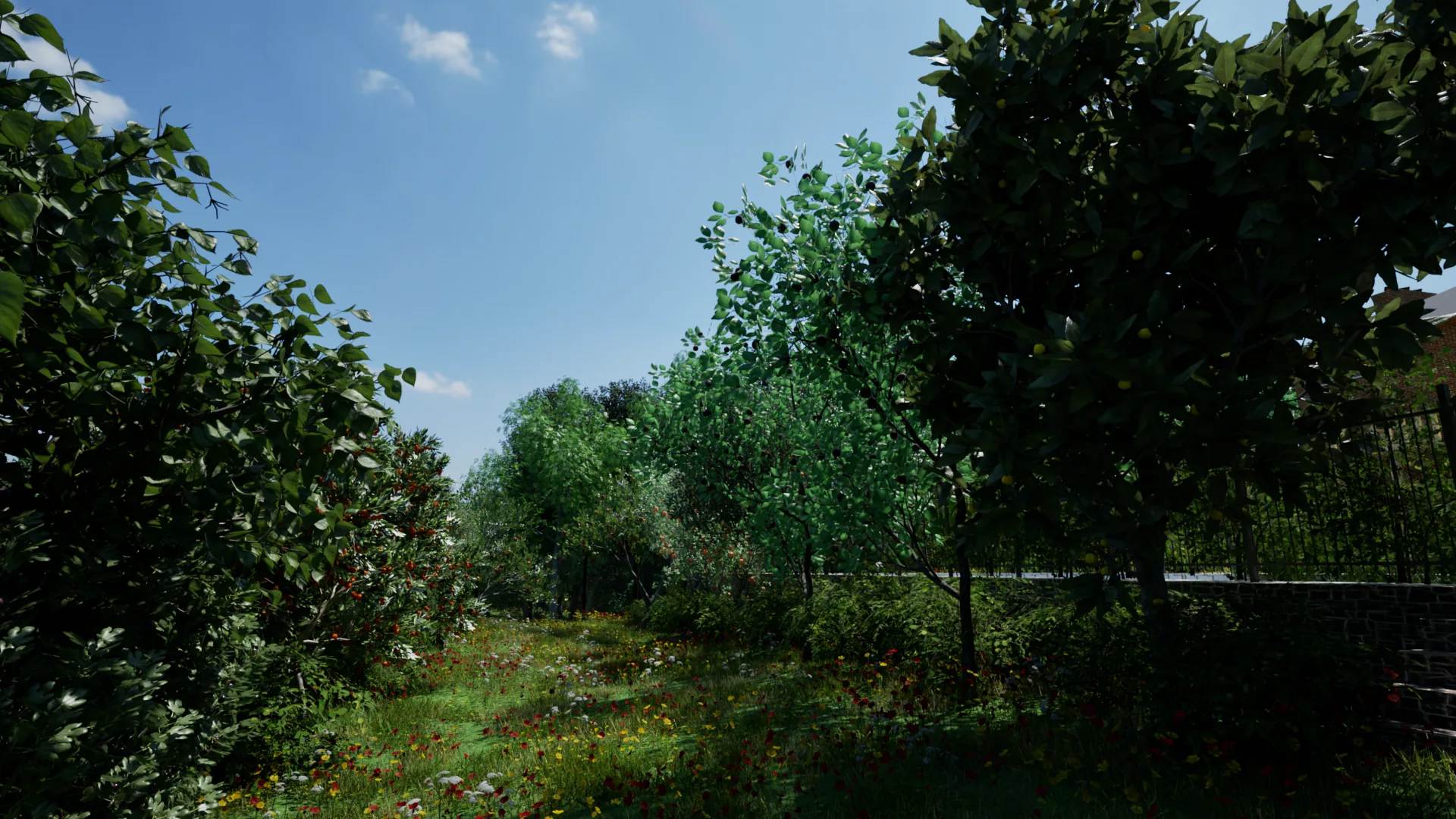
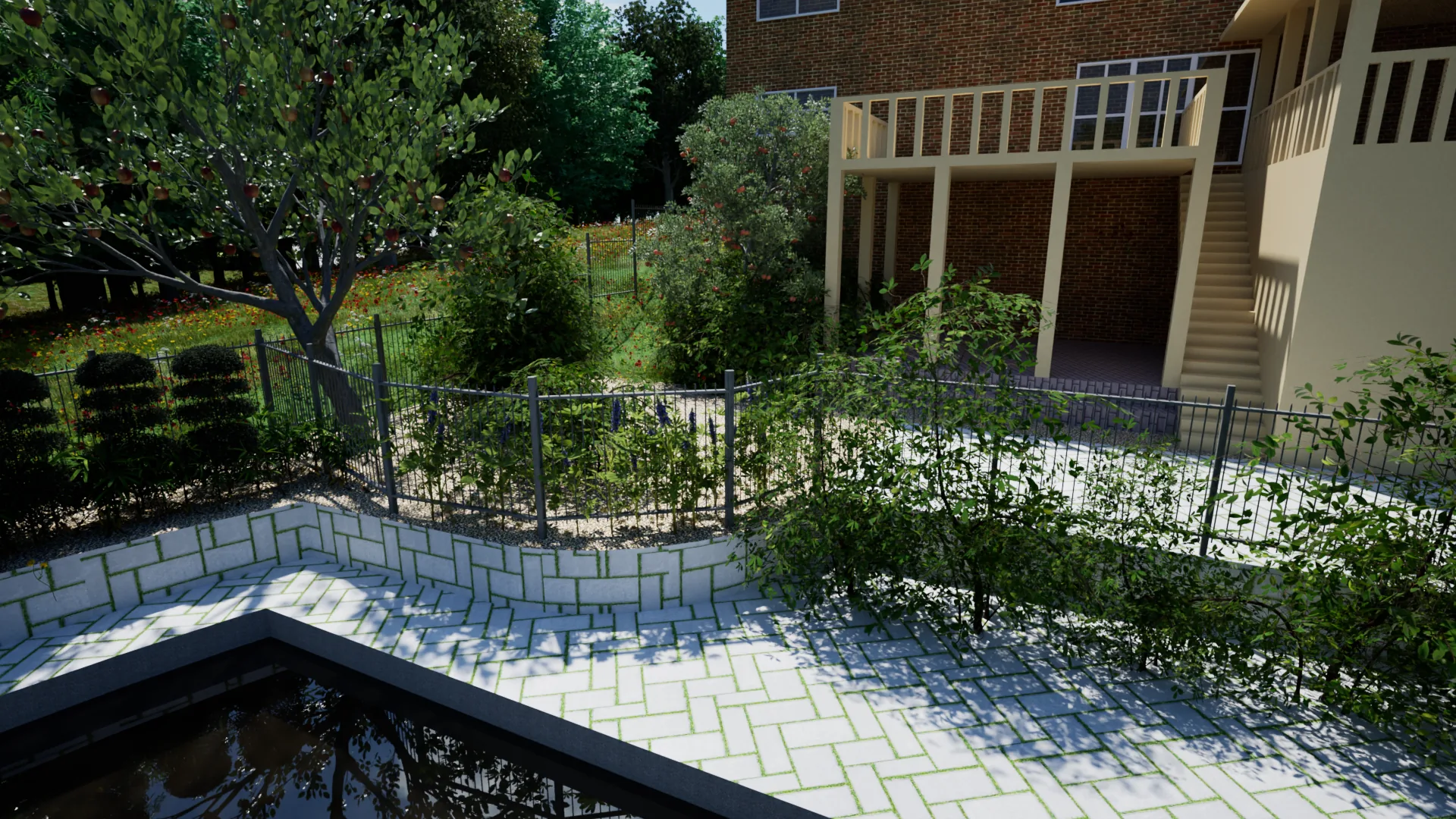
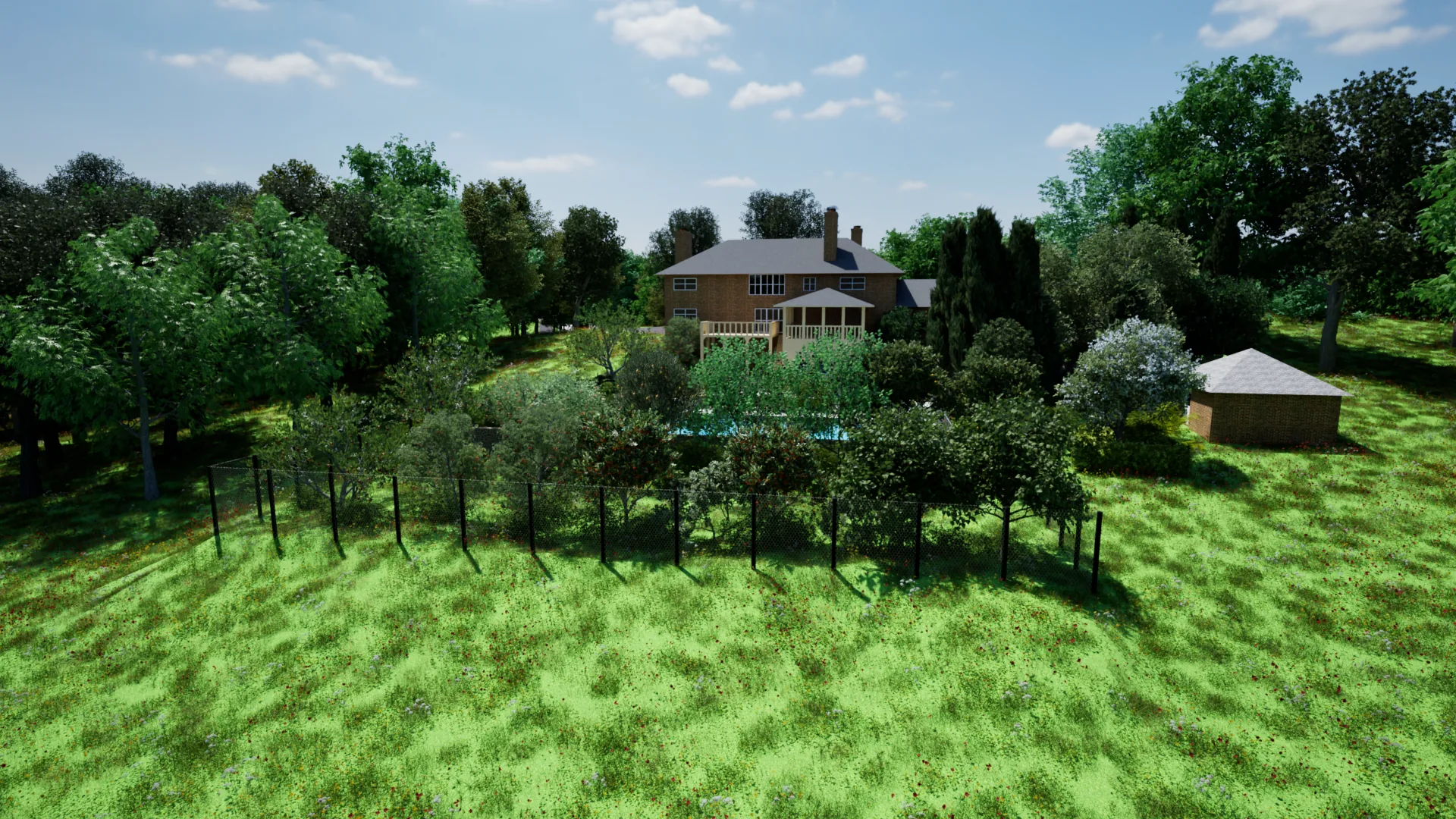
The property, in person.

Site Profile
The land, at a glance.
Hardiness
Zone 7b
Climate
Cfa humid subtropical
Footprint
Two homes
Riparian
100 ft protected buffer
Plans and Goals
What the design achieves.
01
Gather food with low effort, under fifteen minutes a day, in a way the kids actually love.
02
Succession planting for a constant supply of flowers and food rather than concentrated timing.
03
A dwarf fruit tree and berry guild in the south fence corner.
04
A part-shade native pollinator garden that boosts food production without getting in the way.
05
Hardy kiwi vines trained up the existing hardwoods.
06
A goat paddock and enclosure, with room to grow.
07
Deer-resilient perennials at the retaining wall, with tree tubes where needed.
08
A second-phase pollinator garden, riparian habitat build, and privacy trees at the neighboring lot.
Plant Palette
Species going in.
Apple · 2 trees, 3-in-1Fig · 2 treesHaskap · 2 bushesElderberry · 2 bushesCamellia · 1 treeWine Caps · mushroom bedKiwi · 2 vinesBee Balm · native drift
Return on Investment
The harvest ledger
Annual yield at full maturity, priced at $3–4/lb for produce, $8/lb for nuts, and $10/lb for herbs. Excludes annuals, grocery-trip fuel, and supply-chain savings.
Fruit & nut trees
$1,140–$2,370
375–750 lbs / year at maturity.
Berry bushes & vines
$880–$1,800
220–450 lbs / year at maturity.
Vegetables & perennials
$320–$620
80–155 lbs / year at maturity.
Herbs
$90–$180
24–47 lbs / year at maturity.
Annual Total
$2,430–$4,970
699–1,402 lbs at maturity.
Growth Stages
From install to mature system.
- 1–3 yrsPioneerEverything is planted and begins to fill empty space while we rebuild soil health. The most intense and important stage: get the install right and the system can run on autopilot. Irrigation, mulch, and routine care go in now.
- 2–8 yrsEarly growthPlants and trees integrate into the ecosystem and near production of fruits and nuts. Maintenance matters most here, monitoring growth for the good signs and the bad.
- 5–15 yrsAdolescent forestEverything grows into its final form, filling remaining space and beginning to reach full production.
- 8–20+ yrsMature forestFully grown in, occupying all planned space. Harvesting becomes the primary function and maintenance is light.
Kitchen Use Highlights
What the kitchen actually cooks.
Sea Kale
cabbage / asparagus
Roast the flower stalks like broccoli, sauté leaves like kale, blanch shoots like asparagus.
Lovage
intense celery
Leaves in soups and stocks in place of celery. A little goes a long way.
Sweet Cicely
anise / licorice
Chopped into fruit dishes with rhubarb or berries. Reduces the sugar a dessert needs.
Camellia
green tea
Pick young leaves, steam, then dry for your own green tea.
Nasturtium
peppery / arugula
Flowers and leaves raw in salads, seed pods pickled as a caper substitute.
Haskaps
blueberry / raspberry
Jams, pies, smoothies, or fresh. Makes excellent liqueurs and syrups.
Investment and Returns
What the design gives back.
$2,430–$4,970
Annual grocery offset at maturity, before annuals or fuel savings.
96,670 gal
Rainwater captured each year, routed to the highest-demand beds first.
+10%
Upside from annuals such as tomatoes and peppers in the raised beds.
These figures exclude the intangibles: fewer food miles, less strain on the supply chain, and the hours the family spends outside together rather than at the store.
Next step
Ready to move forward?
Schedule a 15-minute call to discuss phasing, timing, and what comes next for the property.
Book a discovery call →